


The 3 most beautiful high-altitude panoramas in La Réunion (and how to photograph them)
It is no coincidence that Réunion Island is nicknamed the "Intense Island." Shaped by volcanic fire, it features dizzying terrain that includes some of the highest peaks in the Indian Ocean. For those who love landscape photography and hiking, Réunion Island is a true open-air paradise.
From the sheer ramparts of the island’s natural amphitheaters to landscapes reminiscent of lunar craters, the high-altitude terrain here offers truly surreal sights. Get your lenses ready and clear your memory cards: here are the 3 most spectacular high-altitude viewpoints on Reunion Island, along with all our expert tips for capturing the perfect shot.
1. Sunrise at the summit of Piton des Neiges (3,070 m)
Dominating the entire island, Piton des Neiges is the rooftop of Réunion. Scaling it is the holy grail for any hiker, but the ultimate reward awaits at the summit—just before dawn, as the sun emerges from the Indian Ocean.
The panorama: A 360-degree viewpoint, unique in the world. You will see the volcano’s shadow cast across the island, with the cirques of Cilaos, Salazie, and Mafate unfolding at your feet beneath a magnificent sea of clouds.
Instagram photography tip: The "blue hour" and the "golden hour." Arrive at the summit 30 minutes before the official sunrise. This is when the gradients of purple, orange, and pink are at their most intense. A tripod is essential, as the light level is very low and the wind can cause the camera to vibrate.
A local’s tip: Remember to protect your batteries from the cold! At altitudes above 3,000 meters on Réunion Island, temperatures frequently hover around 0°C (and sometimes even lower). Keep your spare batteries in an inside pocket, close to your body, to prevent them from draining instantly.
2. Le Grand Bénare (2,898 m) and the dramatic, plunging view over Mafate
As the third-highest peak on the island, Le Grand Bénare offers one of the most dizzying and wild vistas in Réunion. Accessible via a magnificent ridgeline starting from the famous Maïdo viewpoint, this hike leads you to the edge of a sheer, dramatic escarpment.

The panorama: on one side, the Cirque de Cilaos; the other side, the Cirque de Mafate. Grand Bénare offers a plunging view down nearly 1,000 meters of vertical cliff face. It is the perfect shot to illustrate the vastness of the landscapes on Réunion Island.
Photography tip: Play with human scale. To convey the sheer magnitude of the landscape, ask your hiking partner to step—safely—toward the edge of the rampart. Use a wide-angle lens (16mm or 24mm) to capture both the subject in the foreground and the dizzying depth of the cirque in the background.
Perfect timing: Set off very early (ideally by headlamp, as early as 4:00 or 5:00 a.m.). On Réunion Island, daytime clouds typically roll into the cirques by 9:00 or 10:00 a.m. To enjoy a clear view, punctuality is key.
3. The Pas de Bellecombe-Jacob and the lunar atmosphere of the Piton de la Fournaise (2,632 m)
A radical shift in atmosphere: leave the verdant ramparts behind and step into an otherworldly, apocalyptic landscape. Piton de la Fournaise—one of the most active volcanoes on the planet—offers a striking visual experience from the Pas de Bellecombe-Jacob.

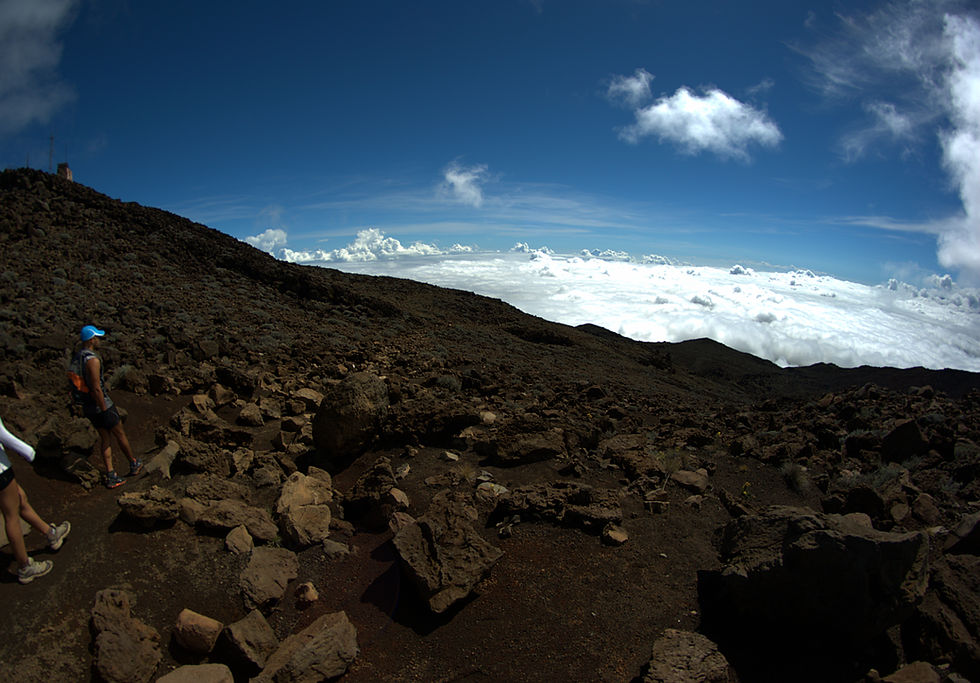
The panorama: An immense caldera (the Enclos Fouqué) from which the volcano’s main cone rises, surrounded by lava flows in shades of black, red, and ochre. The contrast between the blue sky and the dark volcanic rock is striking.
Photography tip: Use a polarizing filter. Light in the island’s highlands can be very harsh in the middle of the day, washing out the terrain’s contours. A polarizing filter will saturate the blue of the sky and bring out the incredible textures and metallic sheens of the lava. If you are fortunate enough to be in Réunion during an eruption, try a long-exposure shot at night to capture the rivers of fire.
A little tip: Don’t just photograph the summit. On the way to the volcano, be sure to stop at the Plaine des Sables. This desert of red volcanic cinders offers a unique, Mars-like landscape that is sure to boost engagement on your blog or Instagram account.
📸 A summary of tips for taking great photos at high altitudes in Reunion Island:
Aim for the morning light: as the saying goes, "Réunion belongs to those who rise early." After 10 a.m., a curtain of mist often closes back over the peaks.
Prepare for the elements: Bring a waterproof bag for your camera gear. At high altitudes, the weather can change rapidly—shifting from blazing sunshine to light rain or thick fog.
Optimize your backpack: The trails are demanding. Don’t overload yourself—a camera body, a versatile zoom lens (such as a 24–70mm), and an ultra-wide-angle lens are more than enough to capture all these magnificent landscapes.


Comments